Davis-Bacon Act Requirements for Government Construction Projects: What Utah Agencies and Subcontractors Need to Know

Government construction projects carry a different compliance load than private commercial work, and Davis-Bacon Act requirements are usually where electrical subcontractors get tripped up first. Utah agencies and the contractors bidding on their projects both need to understand what separates a federal job from a standard commercial build before ground ever breaks.

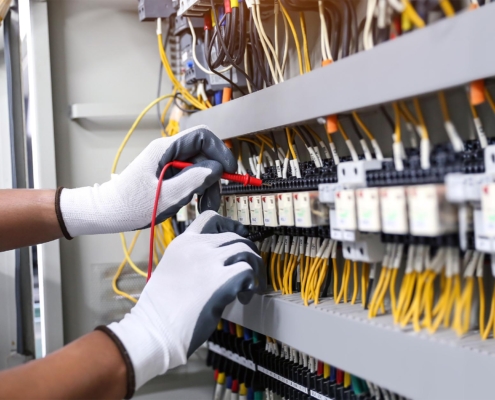
What Makes Government Electrical Work Different From Commercial Construction

Federal, state, and municipal construction projects run on a different set of rules than private commercial work. Davis-Bacon Act requirements set wages by statute instead of by the market, payroll has to be documented and reported instead of just paid, and bonding and registration steps happen before a bid can even be submitted. None of this shows up on a standard commercial bid package.

Delivery Method Changes the Subcontractor’s Role

Government owners generally choose between design-build, where one team handles design and construction together, and bid-build, where the owner’s design is already complete and contractors compete on price to execute it. Some agencies use design-assist, bringing a contractor in during design to catch issues before they become change orders. In a bid-build project, the electrical scope is usually locked before the subcontractor is selected, which limits the ability to flag design conflicts before construction starts. Design-build and design-assist give an electrical subcontractor more input earlier, which matters most on facilities with complex power, security, or life-safety systems.

The Cost of Getting It Wrong

A single missed requirement can disqualify a bid before price is even considered, and government solicitations rarely offer a chance to fix a paperwork gap after submission. A commercial subcontractor choosing between two competing bids usually prices based on speed and relationship. A government subcontractor is competing against a fixed wage table, a mandatory bond, and a compliance record agencies can verify before they ever pick up the phone. The commercial job rewards flexibility. The government job rewards documentation.

Davis-Bacon Act Requirements and Prevailing Wage Compliance

The Davis-Bacon Act applies to most federal construction contracts over $2,000, and many state and local agencies apply similar prevailing wage requirements to their own projects. Davis-Bacon Act requirements set minimum wages and fringe benefits by trade and by county, and they apply regardless of what a subcontractor would normally charge in the private market. Underpaying workers under Davis-Bacon Act requirements can trigger withheld contract payments, and repeat violations can lead to debarment from future federal work.

Prevailing Wage Determinations

The Department of Labor publishes wage determinations for each classification of work in every county. An electrical subcontractor has to pay at least the published rate for electricians working on that specific contract, even when the crew’s normal rate is lower. Wage determinations can also change between when a solicitation is issued and when a contract is awarded, so subcontractors should confirm they’re pricing against the current version before finalizing numbers.

Certified Payroll Requirements

Davis-Bacon Act requirements also include weekly certified payroll reporting. Contractors submit signed payroll records showing hours, classifications, and wages paid for every worker on the job, and those records have to match the published wage determination. Agencies and general contractors reviewing bids will often ask directly how a subcontractor handles certified payroll requirements, since a weak answer signals a compliance gap before work even starts.

Utah agencies and general contractors can talk through the electrical requirements for a specific government project before the bid goes out.

Bonding and Registration Before You Submit a Bid

Government construction adds paperwork ahead of the bid, not just during the job. Missing any one of these steps can knock an otherwise qualified subcontractor out of consideration before the technical proposal is even reviewed.

Bid Bond Requirements

Most government solicitations include bid bond requirements, typically set at a percentage of the total bid amount, to guarantee that a contractor will honor its price if awarded the work. Performance and payment bonds usually follow once a contract is awarded, protecting the agency if the work isn’t completed or subcontractors and suppliers aren’t paid. A subcontractor without an established bonding relationship can lose the opportunity before pricing is even discussed.

SAM Registration and Insurance Minimums

Federal contracts require active registration in the System for Award Management, known as SAM.gov, before a contractor can be awarded work, and many state agencies maintain similar vendor registries. Insurance minimums on government contracts also tend to run higher than standard commercial policies, particularly for liability and workers’ compensation coverage.

What Utah Agencies and General Contractors Should Look For in an Electrical Subcontractor

Licensing is the baseline, but government work raises the bar past a standard state license. An electrical subcontractor’s certifications and credentials should go beyond what a commercial job requires, and agencies should expect specific answers, not general assurances.

Security Clearance and Site Access

Facilities tied to national security, defense, or other sensitive operations often require background checks, escorted access, or additional security protocols before a crew can step on site. A subcontractor working near installations like Hill Air Force Base should already understand how badging, access windows, and security briefings affect scheduling, since these steps can add days to a timeline if they aren’t planned for in advance.

Small Business Status and Bonding Capacity

Small business status matters on many government contracts, since agencies frequently set aside a portion of their work for small businesses, and CTI Electric qualifies. Verifying that status during vendor selection, rather than assuming it, keeps a bid from being disqualified on a technicality after the fact. Agencies and general contractors should ask for documentation up front rather than taking a subcontractor’s word for it.

Partner With an Electrical Contractor Who Understands Government Work

CTI Electric has performed specialty electrical work for the federal government, the State of Utah, and the Department of Defense for more than two decades, working from a home base in Clearfield near Hill Air Force Base and across Utah’s six-county service area. That history means the requirements covered here aren’t new territory. Through design-build, bid-build, and design-assist delivery, CTI Electric prices and staffs government projects with Davis-Bacon Act requirements built in from the start rather than added on after award. Utah agencies and general contractors evaluating an electrical subcontractor for a federal, state, or municipal project can start that conversation before the solicitation closes.

More Like This

Two maintenance engineers inspect relay protection system with laptop
Artificial intelligence (AI), machine learning and modern computer technologies concepts
Steel studs used to frame in a large commercial building
Back view of a technician conducting electric construction
Front view of the interior of a shopping mall