The Electrical Maintenance Checklist Every Facility Needs

When you hire a contractor for electrical maintenance, do you know what you’re actually getting? A clear, comprehensive electrical maintenance checklist can help you verify that your plan includes the right inspections, tests, and documentation. Whether you’re evaluating a current provider or building a new preventative maintenance plan, this guide will help you understand what’s included in electrical maintenance—and what should be.

Why You Need an Electrical Maintenance Checklist

Even if you’re working with a reputable contractor, assumptions can be costly. Without a defined electrical maintenance checklist, it’s easy for critical tasks to fall through the cracks. This is especially true if service visits are rushed, infrequent, or undocumented.

A clear checklist not only outlines what should happen during each visit but also acts as a reference point for accountability, compliance, and quality assurance. Here’s how:

  • Creates clarity between you and your provider: Everyone knows what’s expected during each visit, reducing confusion or skipped steps.
  • Ensures compliance with industry standards: A properly built plan reflects the NFPA 70B checklist, which outlines best practices for electrical system upkeep.
  • Helps internal teams track routine tasks: Facility managers need visibility into routine electrical service tasks to understand what’s been done and what still needs attention.
  • Enables better vendor performance comparisons: If you’re evaluating multiple contractors, a checklist gives you a measurable way to compare their services.
  • Reduces liability and improves documentation: A detailed plan makes it easier to show proof of proactive care during audits, inspections, or insurance claims.

In short, a well-documented preventative maintenance plan ensures nothing gets missed and gives you the confidence that your system is being cared for properly.

Core Items on an Electrical Maintenance Checklist

A strong electrical maintenance checklist covers far more than just flipping a few breakers and scanning for obvious damage. It’s a comprehensive plan designed to catch issues early, optimize system performance, and maintain compliance with industry standards.

Whether you manage a commercial building, industrial facility, or multi-unit residential property, these are the non-negotiable tasks that should appear in every preventative maintenance plan to ensure long-term electrical safety and reliability.

Visual Inspections of Panels, Wiring, and Equipment

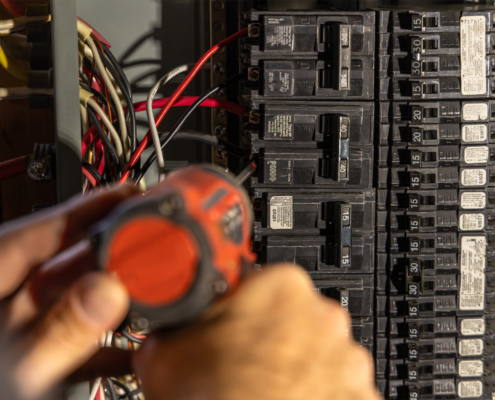
The first step in any maintenance visit should be a detailed visual inspection. Technicians should examine electrical panels, conduit, outlets, junction boxes, and other key areas for signs of physical wear, discoloration, corrosion, or exposure to moisture.

Visual assessments may seem basic, but they often uncover warning signs that indicate deeper problems, making this an essential part of what’s included in electrical maintenance.

Thermal Imaging and Hot Spot Detection

Many electrical issues develop internally before they produce visible signs. Using infrared scanning, technicians can detect “hot spots” in circuits, wiring, breakers, and transformers—areas where excess heat suggests poor connections, overloaded circuits, or impending component failure.

This non-invasive technique is especially valuable in high-demand environments and is considered a best practice for any thorough electrical maintenance checklist.

Circuit Breaker and Protection Testing

Breakers are your first line of defense against electrical overloads and short circuits, but they don’t last forever. Regular testing ensures that each breaker trips within the correct parameters and functions reliably under stress. This task often includes simulated fault conditions, performance logging, and inspection of fuses, disconnects, and protective relays.

In critical settings, overlooked breaker failures can lead to severe system damage or even fires, making this a cornerstone of any routine electrical service tasks list.

Voltage, Load, and Grounding Checks

To maintain system stability and protect sensitive equipment, technicians must evaluate voltage levels, balance across phases, and ensure proper grounding throughout the facility. Load testing helps prevent overloads and identifies circuits that are being pushed beyond their safe capacity. Poor grounding can lead to shocks, surges, or erratic equipment behavior.

These tests are especially vital for facilities with fluctuating energy use, such as data centers or manufacturing lines, and they tie directly into the risk reduction goals of a preventative maintenance plan.

Torqueing and Tightening Electrical Connections

Over time, connections inside panels and equipment can loosen due to heat cycling, vibration, or normal wear and tear. Loose terminals are one of the most common causes of arcing and electrical fires. As part of scheduled maintenance, technicians should use torque-rated tools to retighten lugs, terminals, and mechanical fasteners to manufacturer-specified levels.

While often overlooked, this hands-on task adds a critical layer of safety and should never be skipped in a high-quality electrical maintenance checklist.

Preventative Maintenance Documentation

Finally, a maintenance visit isn’t complete without detailed documentation. Technicians should provide written reports outlining the tasks completed, any issues found, recommended corrective actions, and scheduling for future service.

These reports support internal planning and serve as proof of compliance with industry and insurance standards. If you’re not receiving formal documentation, that’s a sign your contractor may not be following a true preventative maintenance plan.

Even the best electrical maintenance checklist can’t catch everything. If you’re noticing irregular performance between inspections, CTI Electric’s troubleshooting services can quickly identify and resolve issues before they escalate.

Customizing Your Preventative Maintenance Plan

No two facilities are exactly alike, and neither are their electrical systems. That’s why a strong electrical maintenance checklist should never be treated as a copy-paste template. A solid plan is tailored to the unique risks, infrastructure, and usage demands of the building it serves.

Several factors help determine what tasks should be prioritized and how often they should occur. For example, a facility with aging infrastructure and high energy demands might need quarterly thermal scans and breaker testing. On the other hand, a modern office space with minimal load may only need annual checkups focused on safety and code compliance.

Here are key areas where customization often makes the biggest impact:

  • System Age and History: Older systems or those with a history of issues will benefit from more regular inspections and performance testing.
  • Operational Load: Facilities that run around the clock require more aggressive schedules for tasks like infrared scanning, load testing, and breaker inspections.
  • Critical Equipment: Properties with data centers, life-safety systems, or complex automation setups may need specialty tasks added to their routine electrical service.
  • Compliance and Insurance Requirements: Some businesses must follow the NFPA 70B checklist closely or provide documentation for insurers. Customization ensures that those specific benchmarks are built into the plan.

The goal of a well-tailored preventative maintenance plan is to streamline your workload, not add to it. A good maintenance partner will take time to understand your facility’s needs, consult relevant codes and manufacturer specs, and recommend a schedule that’s thorough, but not excessive.

In the end, customization is what transforms a basic checklist into a strategic tool for reducing risks and supporting long-term system health.

Ready to Take a Closer Look at Your Electrical Maintenance Plan?

If you’re unsure whether your current provider is covering everything they should, or if you’ve never had a formal electrical maintenance checklist in place, it’s time to get clarity. CTI Electric builds custom maintenance programs that align with NFPA 70B standards, system complexity, and your facility’s operational goals.

Contact us today to eliminate uncertainty and start building a plan that truly protects your people, property, and equipment.

More Like This

How Electrical Preventative Maintenance Supports OSHA and NFPA Compliance
Professional electriciian working on electrical box
How to Set the Right Electrical Maintenance Schedule for Safety & Savings
How Preventative Electrical Maintenance Can Save You Big Money on Repairs
How AI-Powered Gun Detection Systems Bolster School Violence Prevention
Professionals inspecting electrical system outside
Electricians inspecting electrical system
Two workers performing an electrical audit