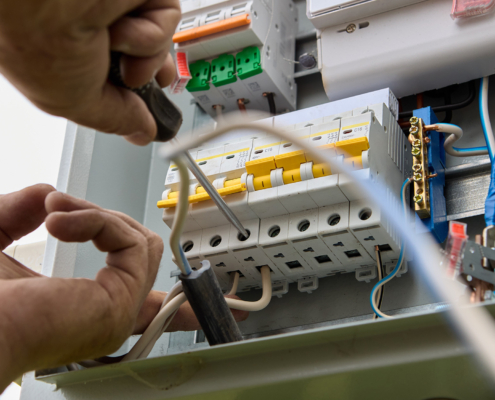
Regular switchgear maintenance extends the life of breakers, panelboards, and switchboards well beyond their original design assumptions. Cleaning, torque checks, and thermal scans catch the problems that cause most failures: loose connections, insulation breakdown, and overheating. Most switchgear is built for a service life of 20 to 30 years under normal conditions, though heavy duty cycles, harsh environments, or inconsistent switchgear maintenance can shorten that window well before the equipment reaches its design age. But switchgear maintenance only works on equipment that can still be maintained. Once components are obsolete, oxidized past the point of reliable operation, or failing more often than they get fixed, more maintenance stops being the answer.
Obsolescence is often the deciding factor before wear ever is. Manufacturers eventually stop producing parts for older breaker and switchgear lines, and once a model is discontinued, sourcing replacement components means used parts, third-party remanufacturers, or custom fabrication, all of which add cost and lead time to what used to be a routine repair.