Switchgear Maintenance vs. Replacement: How Facility Managers Can Make the Right Call

Switchgear maintenance can keep equipment running for years, but it can also mask a bigger problem: gear that has quietly moved past the point where repair still makes financial sense. NFPA 70B’s condition-based framework gives facility managers a way to tell the difference before a failure forces the decision.

Why Switchgear Maintenance Has Limits

Regular switchgear maintenance extends the life of breakers, panelboards, and switchboards well beyond their original design assumptions. Cleaning, torque checks, and thermal scans catch the problems that cause most failures: loose connections, insulation breakdown, and overheating. Most switchgear is built for a service life of 20 to 30 years under normal conditions, though heavy duty cycles, harsh environments, or inconsistent switchgear maintenance can shorten that window well before the equipment reaches its design age. But switchgear maintenance only works on equipment that can still be maintained. Once components are obsolete, oxidized past the point of reliable operation, or failing more often than they get fixed, more maintenance stops being the answer.

Obsolescence is often the deciding factor before wear ever is. Manufacturers eventually stop producing parts for older breaker and switchgear lines, and once a model is discontinued, sourcing replacement components means used parts, third-party remanufacturers, or custom fabrication, all of which add cost and lead time to what used to be a routine repair.
Signs Maintenance Alone Isn’t Enough

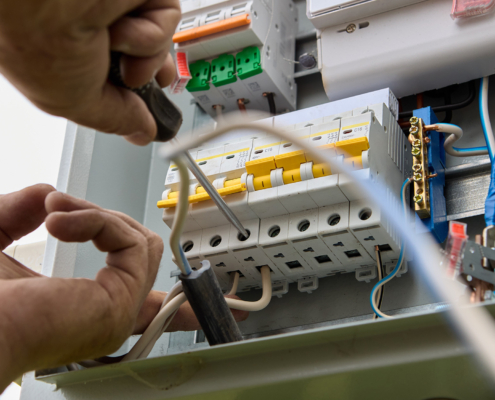
A few patterns tend to show up before a full switchgear failure. Breakers that trip without an obvious cause, replacement parts that are backordered or discontinued, and repair visits that fix the same switchgear maintenance issue more than once are all worth tracking closely. Vacuum breakers common in modern switchgear are typically rated for 10,000 to 30,000 mechanical operations before internal contacts wear out, a limit that arrives faster in facilities with frequent switching, like motor starting or capacitor bank cycling. A guide to electrical warning signs breaks down what these patterns typically mean for commercial buildings.

Facility managers weighing switchgear maintenance against replacement don’t have to make that call alone.

Using NFPA 70B to Make the Call Objectively

Facility managers don’t have to guess where their switchgear stands. NFPA 70B’s 2023 update gives every piece of electrical equipment a condition rating: Condition 1, Condition 2, or Condition 3. Condition 1 equipment shows no signs of degradation and needs only routine attention. Condition 2 equipment still functions but shows measurable wear, aging insulation, or minor corrosion that needs closer monitoring. Condition 3 equipment has degraded to the point where failure risk is elevated no matter how carefully it’s operated. That rating, not a gut feeling about age, is what should drive the switchgear maintenance decision. A properly documented condition-based maintenance plan turns electrical switchgear maintenance from a reactive task into a scheduled, defensible program.

What Switchgear Testing and Inspection Reveal

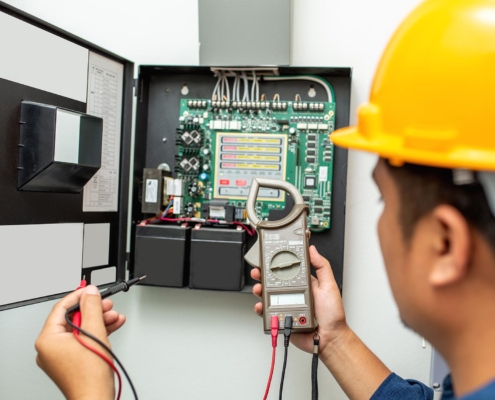
Switchgear testing does more than confirm equipment still works. Infrared thermography identifies hot spots before they cause an outage, and insulation resistance testing flags degradation inside the unit that a visual check would miss. Circuit breaker maintenance, including exercising and torque-testing each breaker, confirms whether the unit still protects the system the way it was designed to. Facilities that follow a documented maintenance schedule catch Condition 2 equipment before it slides into Condition 3, when the only remaining options get more expensive.

Why Documentation Drives the Decision

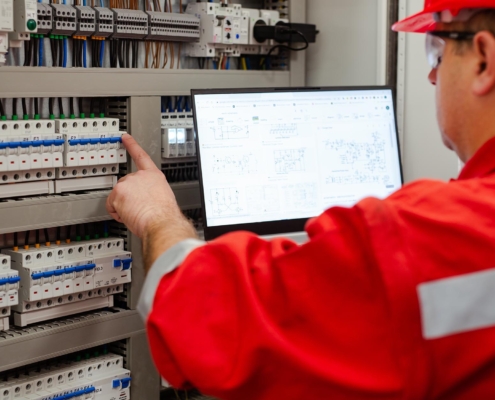
An Electrical Maintenance Program under NFPA 70B requires facility teams to document inspection results, test data, and condition classifications for every piece of covered equipment. That documentation does more than satisfy an auditor. It creates a defensible paper trail that shows whether a piece of switchgear moved from Condition 1 to Condition 2 gradually or dropped fast, which is often the clearest signal that a component is failing rather than simply aging. Without that record, the maintenance-or-replace decision comes down to a single inspection snapshot instead of a trend, and trends are what actually predict failure.

When Switchboard Replacement Makes More Financial Sense

At some point, the math flips, and continued switchgear maintenance costs more than planned replacement would. This shows up most clearly with metal clad switchgear built to older standards, where compatible parts get harder to source every year. Switchboard replacement starts to make more financial sense once repair frequency and repair cost consistently outpace what a planned upgrade would run. A coordination study earns its value here too, confirming that new equipment protects the system correctly instead of just swapping in new gear on old assumptions.

A Practical Threshold: The 50 Percent Rule

A widely used facilities management guideline, the 50 percent rule, offers a practical gut check: if a single repair costs more than half of what a full replacement would cost, replacement is usually the better long-term investment. It works best as a trigger for a deeper assessment rather than a final answer, especially for switchgear, where safety risk and downtime exposure matter as much as the repair invoice itself. Applied consistently, the rule turns a subjective call into a documented threshold that’s easy to defend to finance and operations leadership alike.

Why Lead Times Make Waiting Riskier

Waiting for a failure before acting adds two costs at once: emergency service rates and rush shipping on custom parts, on top of the equipment lead time itself. Standard switchboards can take 30 to 50 weeks to manufacture in 2026, and medium voltage switchgear often runs 45 to 80 weeks depending on specification and manufacturer backlog. A facility that orders replacement gear only after a failure isn’t just paying a premium for rush service. It’s also facing months without full protection while custom equipment is built, tested, and shipped. Planning switchboard replacement around a condition assessment, instead of a breakdown, keeps both the cost and the schedule inside the facility’s control.

How CTI Electric Supports the Maintenance-or-Replace Decision

CTI Electric services switchgear across the full range facility managers deal with, from low voltage systems up to 600V to medium voltage systems from 2,400V to 38kV, including ANSI C37.20.2 metal-clad and ANSI C37.20.3 metal-enclosed switchgear. When equipment is still serviceable, CTI’s technicians handle testing, retrofit circuit breakers, and preventive maintenance schedules built around actual condition data rather than a fixed calendar. When it isn’t, the same team designs and installs UL 891 switchboards, UL 67 panelboards, UL 1773 termination boxes, and custom bus bars sized to the facility’s real load, not a generic replacement. A switchgear assessment typically starts with a condition survey: visual inspection, infrared scanning, and a review of maintenance and incident history for each major component. That survey produces a condition rating for the equipment, along with a realistic budget range for either continued maintenance or planned replacement, so facility managers can bring numbers, not guesses, into their next capital planning cycle.

Whether the right answer is another year of switchgear maintenance or a planned switchboard replacement, facility managers who want that answer backed by real data can start with a CTI Electric switchgear assessment.

More Like This

Artificial intelligence (AI), machine learning and modern computer technologies concepts
Steel studs used to frame in a large commercial building
Tile roof with chimney and lightning protection system installed. Lightning rods. Close-up shot. Lightning conductor.
Lightning conductor on the roof of a commercial building
Commercial Electrical Maintenance for Reliable Construction
Side view of a man in a yellow hard hat conducting a building electrical inspection
Electrician checking connections in distribution board according to wiring diagram